⬇ SUBMIT THE FORM BELOW TO REGISTER FOR THIS FREE WEBINAR ⬇
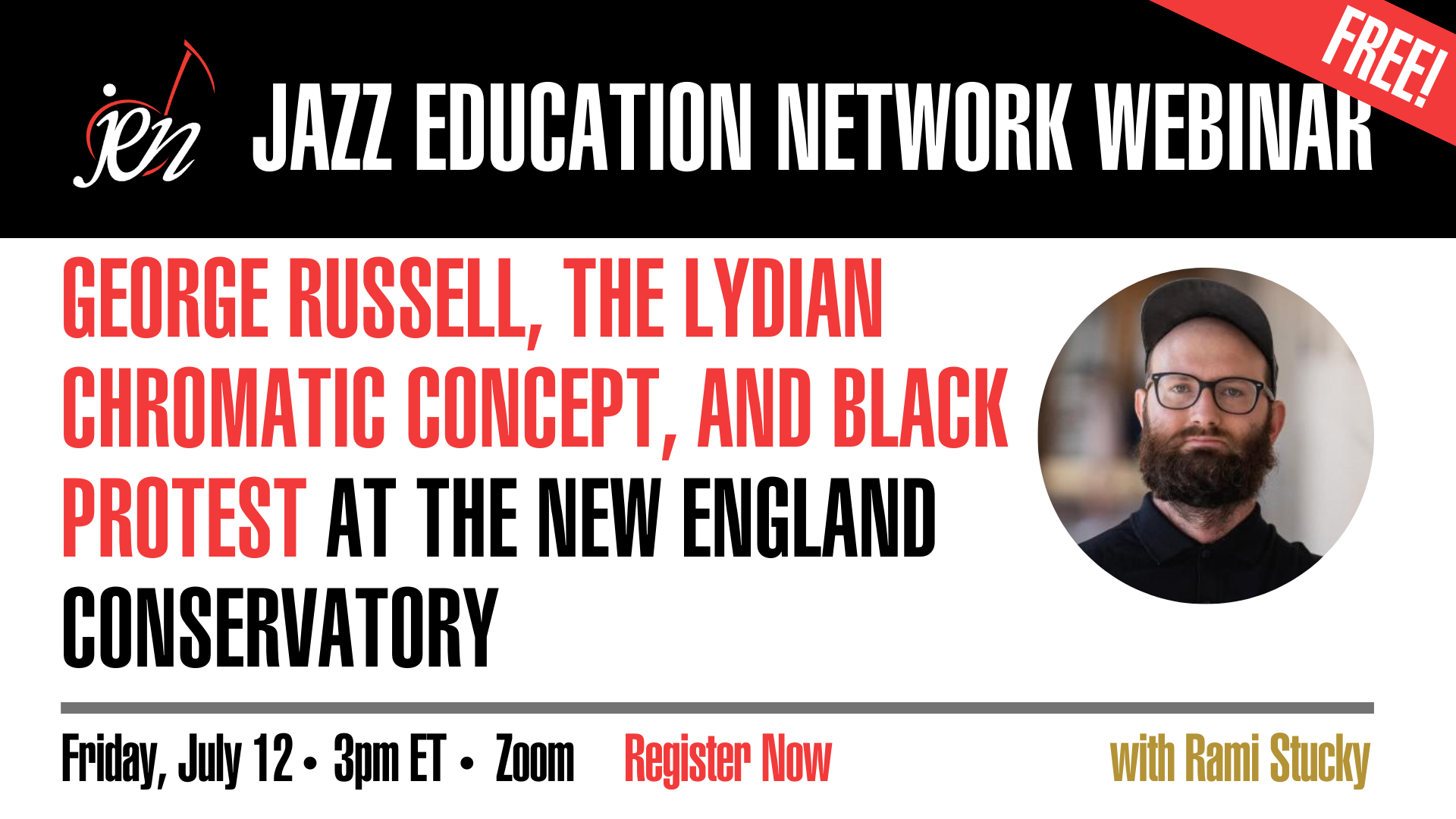
Join Rami Stucky as he discusses composer and theorist George Russell and the impact his Lydian Chromatic Concept had on Black student activism at the New England Conservatory (NEC) during the late 1960s and early 1970s. Rami expands on the work of scholars who have explored how Russell’s concept reflected the spirit of the civil rights era by showing how students were thinking of it as more than simply sonic freedom and in the ways it affirmed Black life at a predominantly White music institution. Scholars have been increasingly advocating for the incorporation of “ fugitive music theorists” such as Russell into undergraduate and graduate music curriculum and this article joins such calls. Relying on conservatory library archives as well as oral interviews with alumni, Stucky argues that Russell’s theories served as a musical and political muse for activists in the Creative Black Artists (CBA) student union during an era of curriculum reform and nationwide student protest. In doing so, Stucky hints at the impact such theories would have on students in the twenty-first century.
Plus a Q & A with the live audience.
A presentation from the Jazz Education Research and Practice Journal, a publication of the Jazz Education Network.
Submit the form below and you will be registered for this FREE webinar!
We do not sell your information and you can opt-out from our communications at any time.
